Marksman ST3 · Professional shooting simulator

Professional shooting simulation.Your firearms. 0.18 MOA.

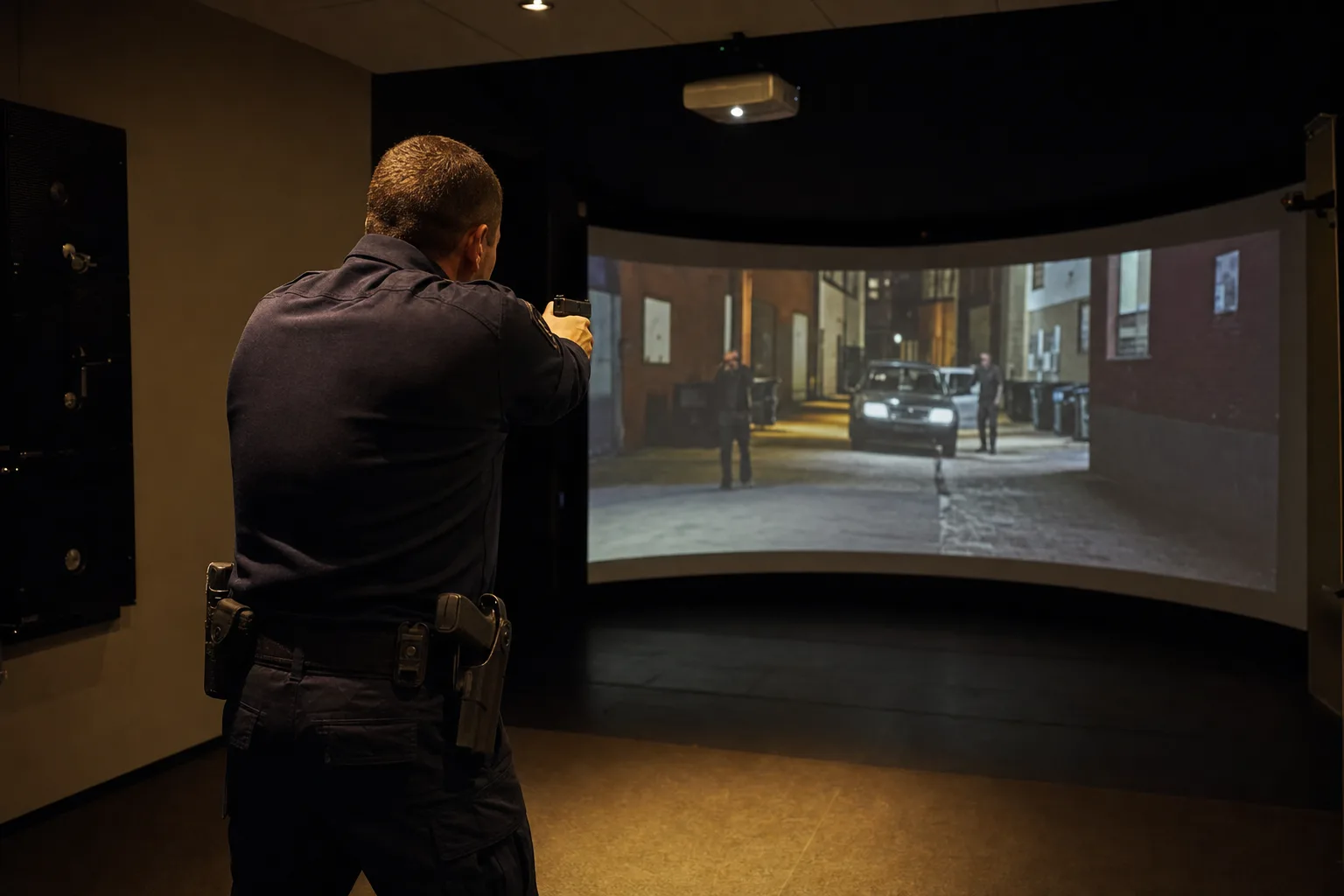
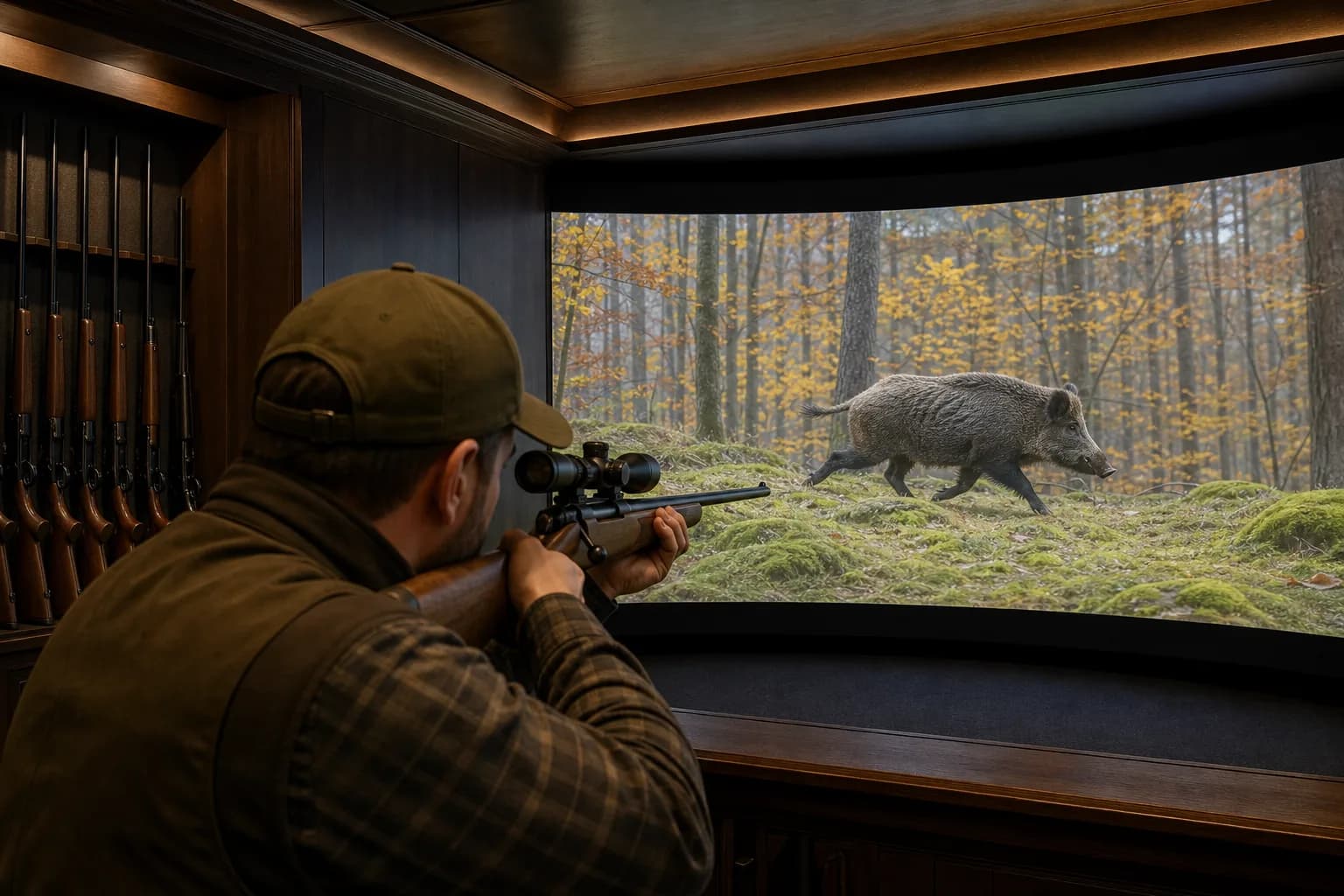
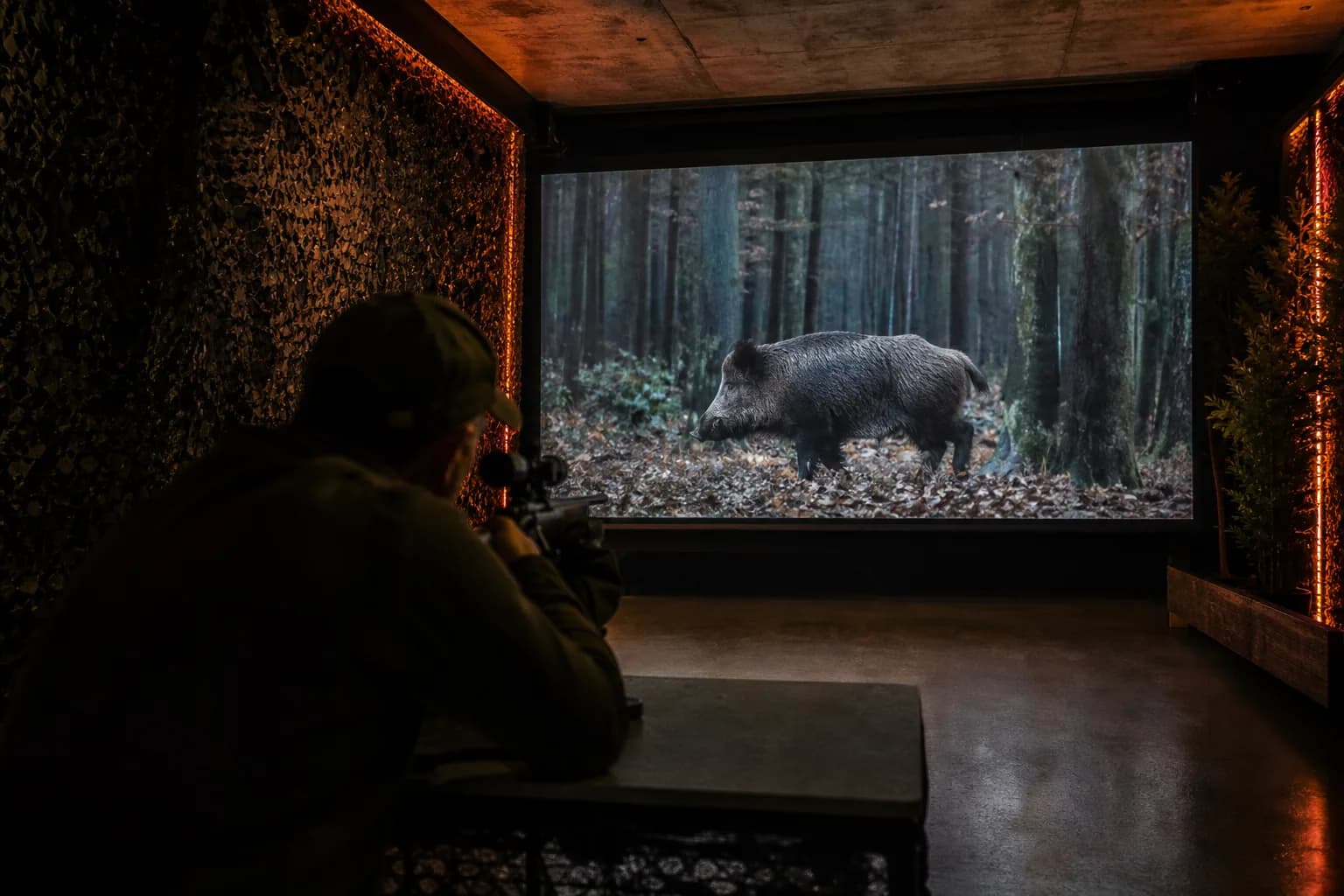
Train with your own rifle, shotgun or handgun using wireless optical tracking — without laser projection or live ammunition.

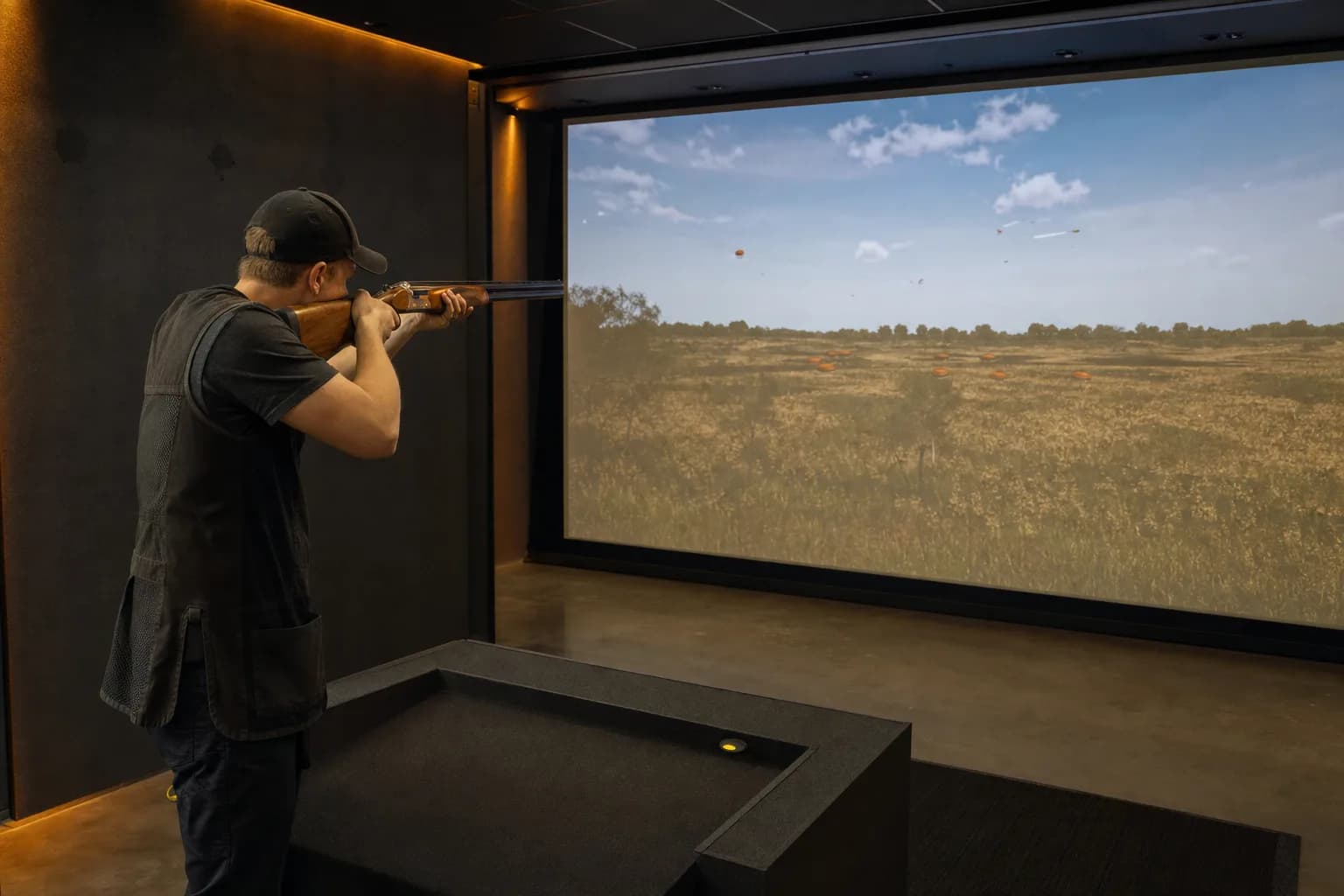
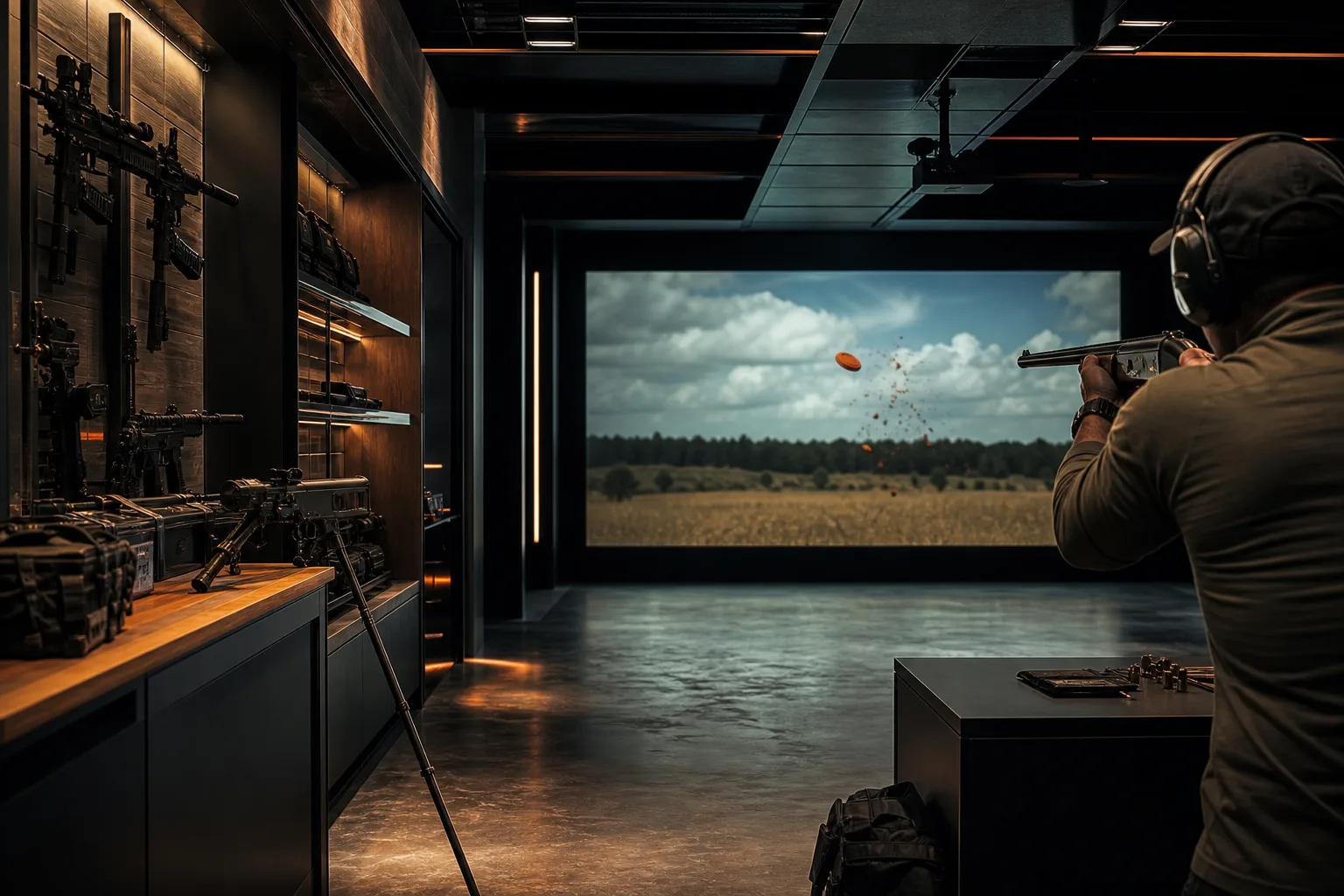
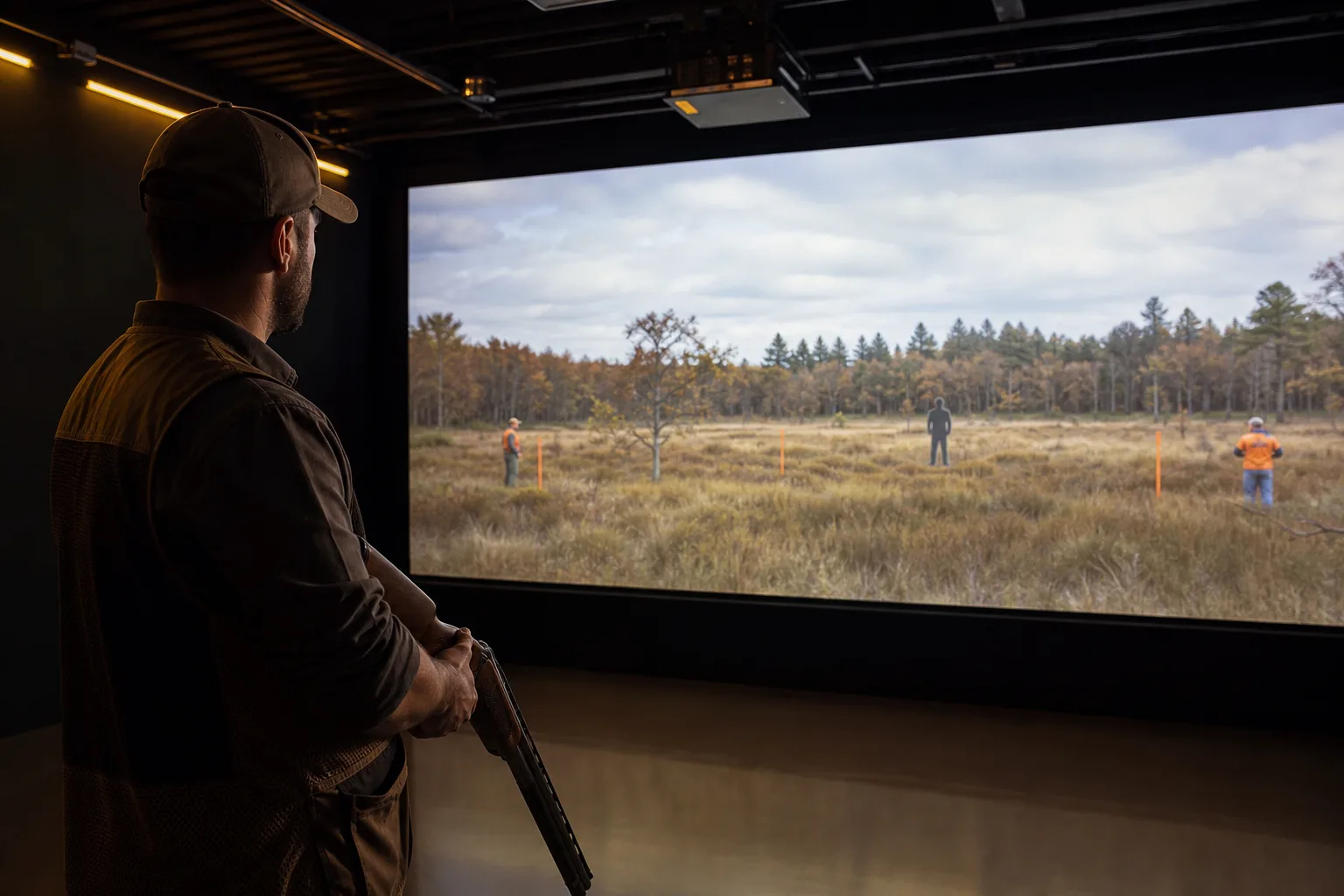
Shooter with a shotgun training against a projected clay field in a Marksman indoor simulator

Clay shooting

ST3 installation: a real firearm and a projected scenario. No live ammunition is fired into the screen.

0.18 MOA. Because simulation is only useful when it's accurate.

  • Response

    ~1 ms

  • Ballistic profiles

    4,700+

  • Scenarios

    1000+

How ST3 works

Your firearm, a projected range, then the record of the session

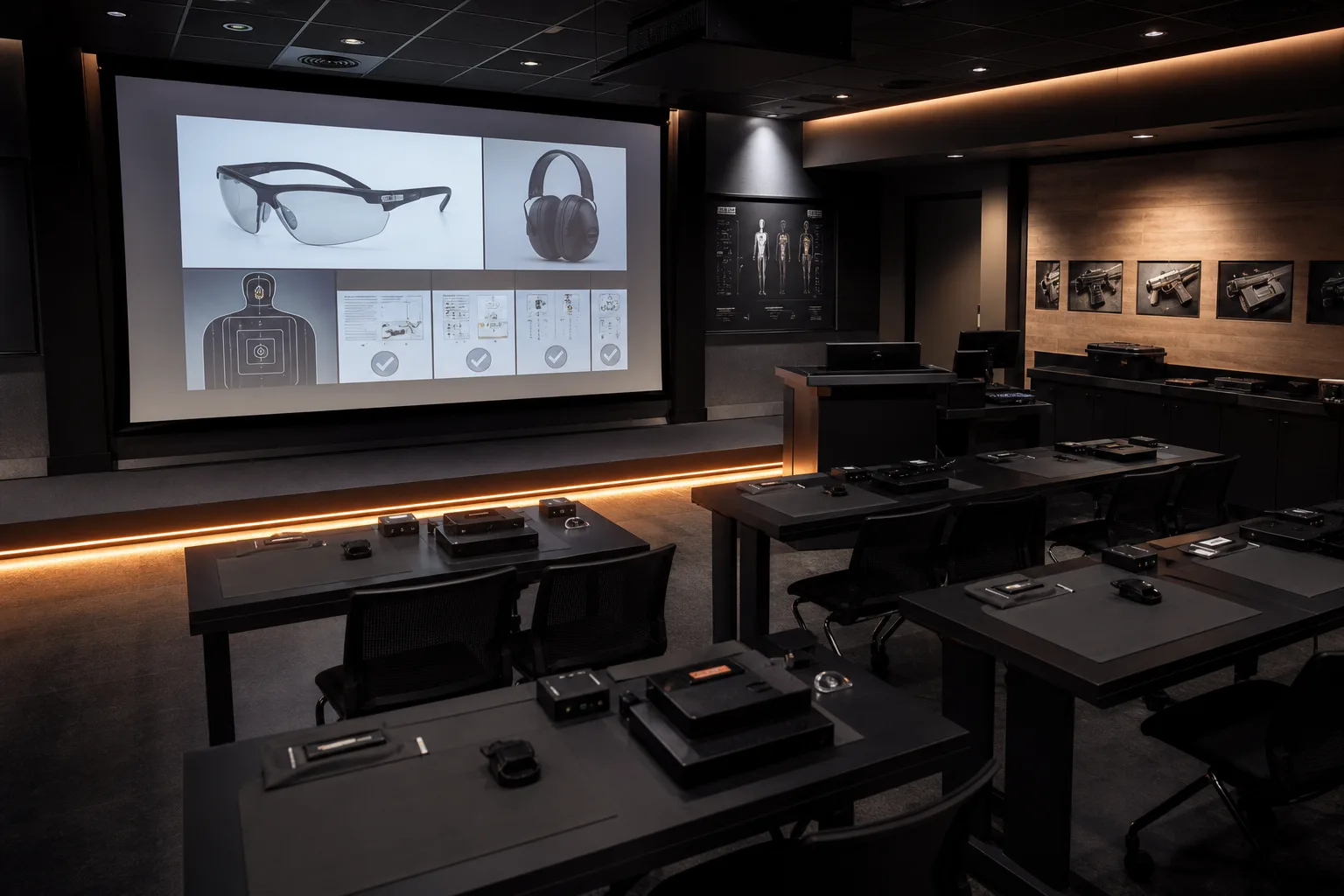
Marksman ST3 is a professional shooting simulator made by Marksman in Sweden. A wireless optical tracker follows your rifle, shotgun, or handgun at 0.18 MOA. Training uses a projected scenario — not a VR headset, laser projection, or live ammunition — with about 1 ms response.

Your firearm → Wireless tracker → Projected scenario → Session analysis

  1. Attach

    Mount the wireless optical tracker on your own rifle, shotgun, or handgun. The shot detector clips to the trigger guard.

  2. Train

    Face the projected scenario with the real firearm in your hands. No live ammunition is fired into the screen.

  3. Analyse

    The system records the shooting interaction so you can review aim, movement, point of impact, and ballistic behaviour after the session.

Why accuracy matters

Precise tracking is what makes the session useful

A simulator helps when the hit you see is the hit you made. Optical tracking is what lets you judge aim, lead, movement, and point of impact — and then read that against ballistic behaviour.

  • Aim

    The tracker follows the firearm, so mount and aim are measured rather than inferred from a laser spot.

  • Lead and movement

    Moving targets stay meaningful when the track keeps up with the swing.

  • Point of impact

    Hit position is read against the scenario and the ballistic profile, not against a beam on the wall.

  • After the shot

    Replay, reaction time, and pattern review use that same record.

In use

  • 350+

    Active units worldwide

  • 38+

    Sovereign Nations

  • 97%

    Would recommend the system to others

    Based on post-session surveys from training centre customers. Quotes reproduced with permission.

Accuracy comparison

Tracker precision vs laser

Professional ranges choose Marksman because hit placement matters. Our patented tracker maps real shots to the screen without laser projection — from the 1 MOA ST-2 generation to today's 0.18 MOA ST3 platform.

0.18 MOA. Because simulation is only useful when it's accurate.

650×

More precise than laser

ST3 at 0.18 MOA versus typical laser simulators at ≥ 2° beam divergence (about 120 MOA) — a 650× precision gap before you count ballistics, real-gun support, or scenario depth.

ST3

Current
Accuracy
0.18 MOA
Latency
1 ms
Technology
Wireless optical tracker

Relative precision

Training stack

Rifle / handgun
235 calibers · 4,700+ profiles
Shotgun
14,000+ combinations
Real firearms
Rifle, shotgun & handgun
Scenarios
1000+ · build your own

Marksman ST3 uses a wireless weapon-mounted sensor and screen mapping — not laser projection. Training stays aligned with real rifles, shotguns, and handguns, authentic trigger weight, and ballistic feedback at 0.18 MOA class precision.

ST-2

Accuracy
1 MOA
Latency
1 ms
Technology
Wired optical tracker

Relative precision

Training stack

Rifle / handgun
95 calibers · 550 profiles
Shotgun
1,200 combinations
Real firearms
Rifle & shotgun
Scenarios
750 scenarios

The ST-2 shooting simulator established Marksman's 1 MOA class accuracy (about 1 cm at 100 m) with a wired tracker and real rifles and shotguns. ST3 refines the same approach with a wireless sensor at 0.18 MOA for tighter groups and stricter validation.

Laser

650× gap
Accuracy
≥ 120 MOA
Latency
Variable
Technology
Infrared laser spot

Relative precision

Training stack

Rifle / handgun
No ballistic calculator
Shotgun
No ballistic calculator
Real firearms
Rarely — practice models
Scenarios
Often fewer than 50

Laser-based shooting simulators project an IR spot from the barrel. Divergence, screen reflectivity, and room lighting commonly limit practical accuracy to several degrees — far below professional MOA standards.

Shooter feedback

In their words

  • 94% Learned something about their shooting skills
  • 95% Say the simulator is a great tool for training regularly

1 / 5

The simulator session clearly helped with the complete process of mount, move, far more control. Being able to finesse the movement and break point is very pleasing. Real confidence booster as well, knowing that the feedback is accurate and then being able to transfer it to the range is incredible. A rapid learning experience.
J.Skeet & compact sporting

Based on post-session surveys from training centre customers. Quotes reproduced with permission.

Post-session diagnostics

See what changed, shot to shot

Every session leaves a trace. Replay movement, read hit position against ballistics, measure reaction time, and review KPIs before you step back on the line.

Movement replay

Replay the full shooting sequence. Barrel speed, mount timing, and follow-through are logged so you can spot technique drift frame by frame.

Hit position

See where the shot landed against target trajectory, ammunition, choke, and pellet data — the same factors that decide impact in the field.

Reaction time

Measure release-to-shot timing on clays and driven targets. Compare runs across a session to tighten sporting lines under pressure.

Pattern analysis

Sort hits and misses across a stand. Build a pattern from saved shots to decide what to adjust before the next round.

After each session

Session KPIs at a glance

Aggregated metrics across disciplines — exportable for coaching and progress tracking.

Hit rate
Per discipline & stand
Reaction time
Mean & best per round
Shot count
Session & cumulative
Miss pattern
Directional bias map
Movement score
Mount & swing stability
Ammo used
By load & choke pairing

True-to-life training

Real weapons. Safety built in.

Train with your own rifle, shotgun, or handgun — real trigger weight, real mount, real follow-through. Scenario tools keep safety in the story before you head outdoors.

Shooter training with a real shotgun in a Marksman indoor simulator

Works with real guns

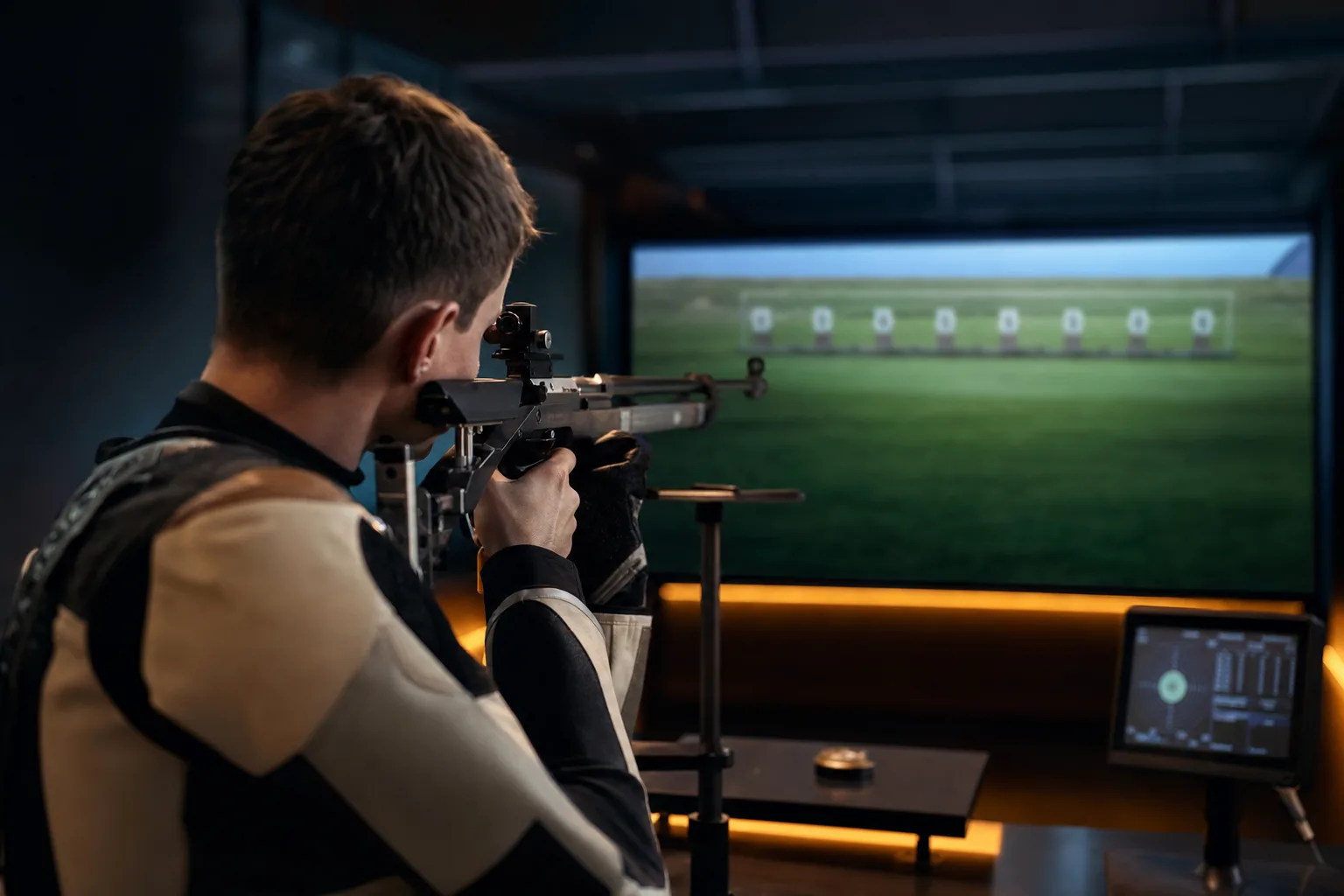
Rifle, shotgun & handgun training uses live firearms, not laser inserts. Authentic trigger break, bolt-action repetition, and tracking that respects how you actually shoot.

Simulator scenario showing safety poles and obstacles during Marksman safety training

Safety first

Add hunters, beaters, and safety poles to scenarios. Practice identifying safe lanes and hold points before field days — obstacles stay visible on screen, not left to imagination.

Previous generation

Field footage from the ST-2

This film shows an earlier Marksman installation. ST-2 is the previous generation: a wired optical tracker at 1 MOA. ST3 is the current product — wireless tracking at 0.18 MOA. The footage is here because it shows the same idea: your firearm, a projected scenario, and no laser pointer.

Marksman ST-2 · previous generationExplore disciplines →

Previous-generation Marksman ST-2 footage: clay, driven game, and rifle training with real firearms. ST-2 used a wired optical tracker at 1 MOA. The current product is ST3, with a wireless tracker at 0.18 MOA.

Frequently asked questions

Who is the Marksman ST3 shooting simulator for?

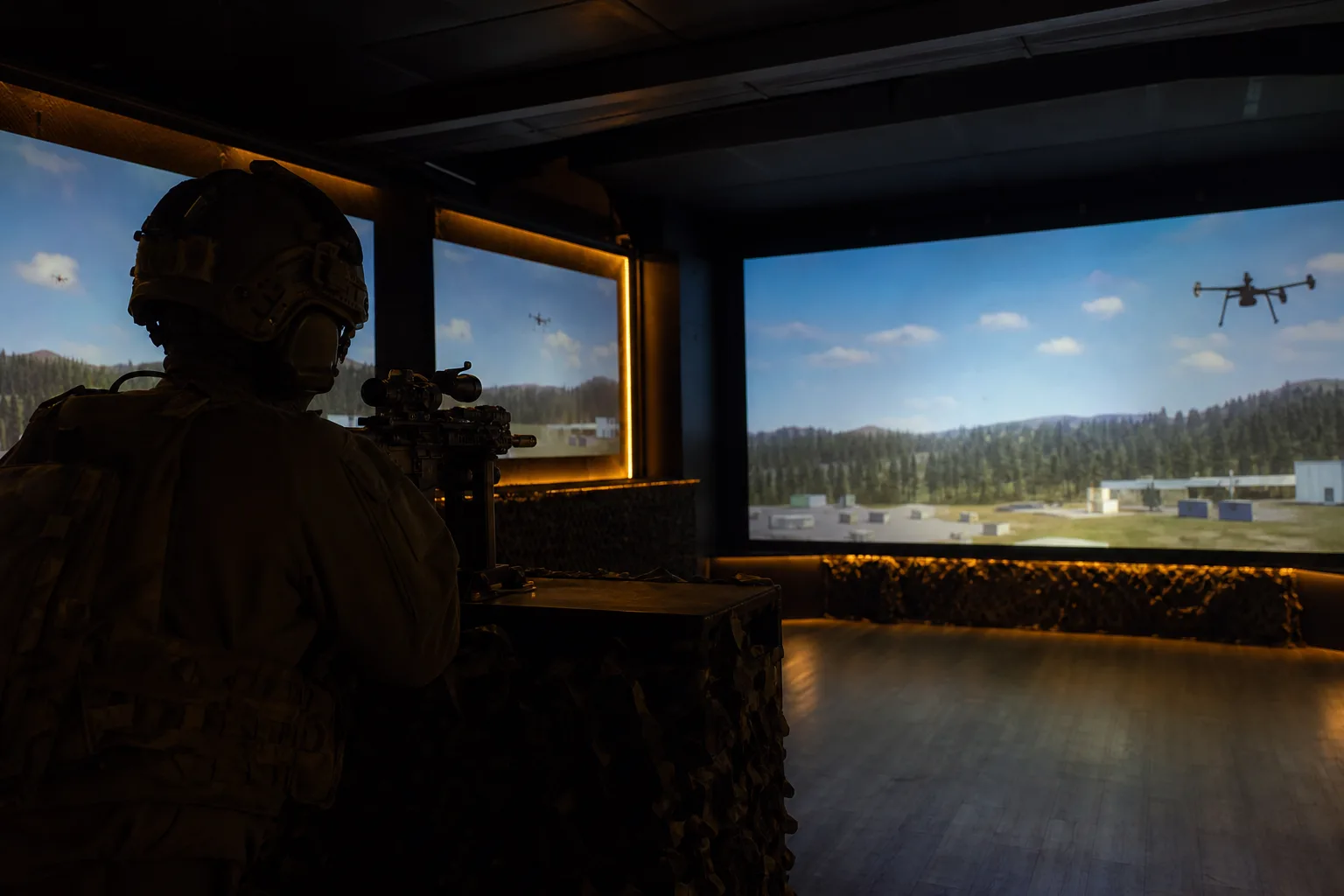
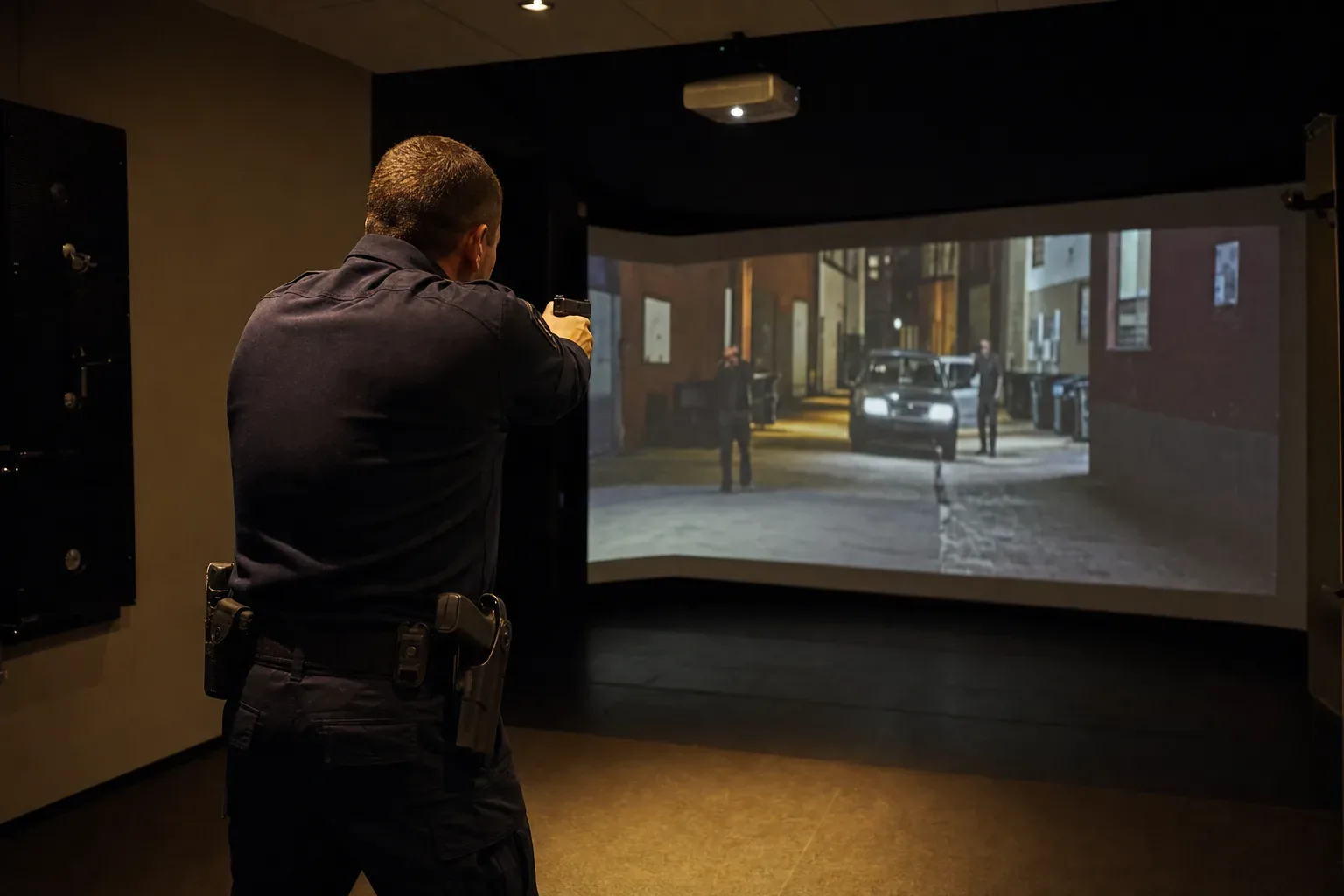
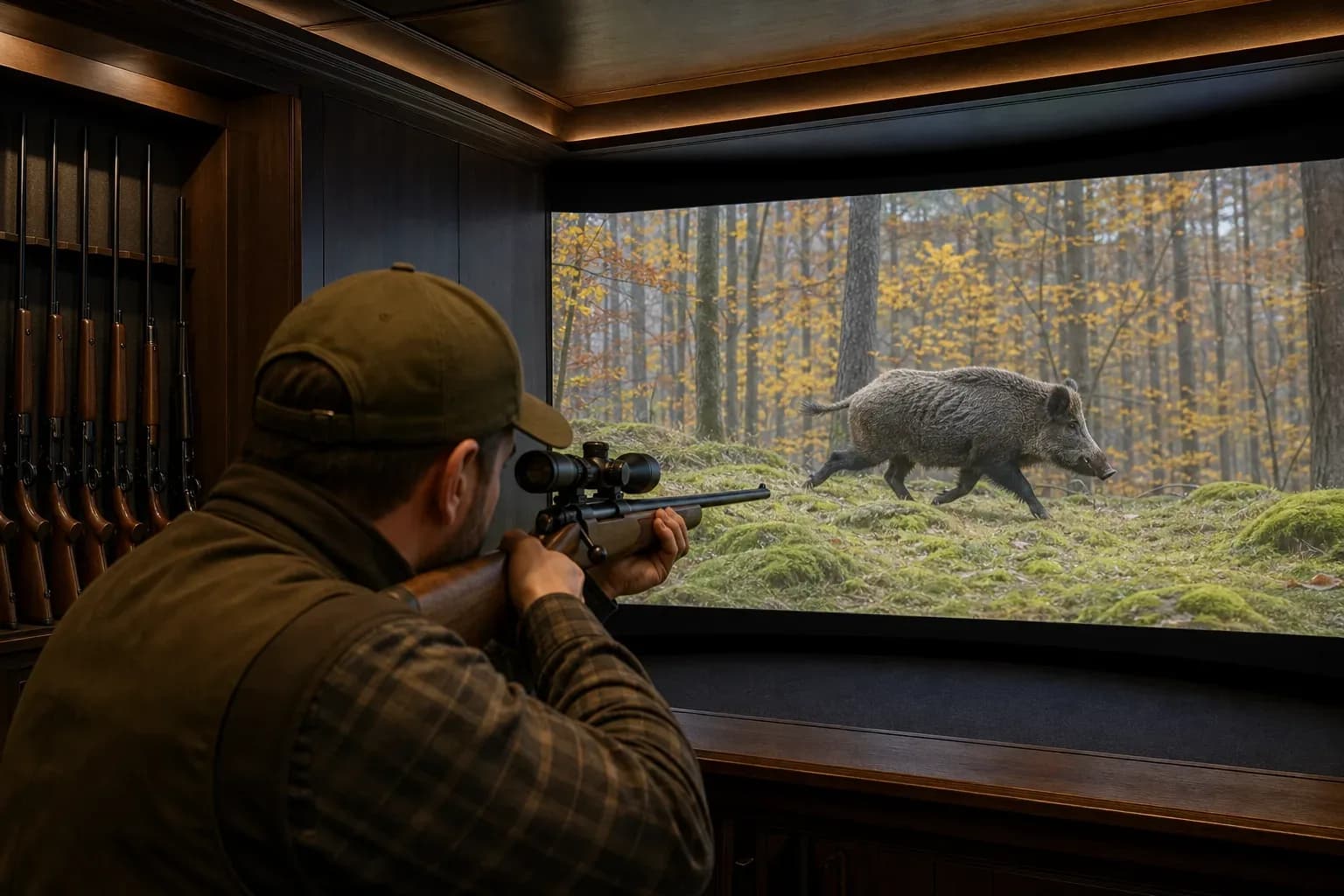
Marksman ST3 serves three primary training worlds on one optical tracker: defense and counter-UAS, law enforcement shoot/no-shoot and CQB drills, and hunting & sporting disciplines. The same platform also supports retail ranges, hunters' federations, schools, private enthusiasts, and competition shooters — with real firearms at 0.18 MOA precision, not laser projection.

How accurate is the Marksman ST3 compared to laser simulators?

Marksman ST3 tracks shots to 0.18 MOA class precision with about 1 ms latency. Typical laser shooting simulators are limited by beam divergence to several degrees — roughly 650 times less precise than ST3 before accounting for missing ballistic calculators, limited real-firearm support, and shallow scenario libraries.

What is the difference between ST-2 and ST3 accuracy?

Both use Marksman's patented optical tracker with real firearms, not lasers. ST-2 delivers about 1 MOA (roughly 1 cm at 100 m). ST3 refines the same architecture to 0.18 MOA for tighter group analysis and stricter professional training standards.

Can I train with rifles, shotguns, and handguns on a Marksman simulator?

Yes. Marksman simulators are built for real guns — including bolt-action rifles, shotguns, and handguns with authentic trigger weight. That is a core difference from many laser trainers designed for modified or lightweight practice firearms.

Is a shooting simulator the same as a virtual shooting range?

In practice, yes. Marksman installs projector-based virtual ranges for hunting schools, sport shooters, law enforcement, and defense training — with ballistic calculators, clay disciplines, and big-game scenarios.

Why doesn't Marksman use VR for shooting training?

We like VR for gaming — not for serious firearms training. A headset sits between you and your rifle, shotgun, or handgun, so you lose sight of the real weapon: mount, stock weld, and follow-through no longer match what you do in the field. Rendering adds latency on top of that, and it rarely feels like shooting a real gun. Marksman ST3 keeps your actual firearm in your hands and maps hits to a projected screen at about 1 ms.

Can I install a shooting simulator at home?

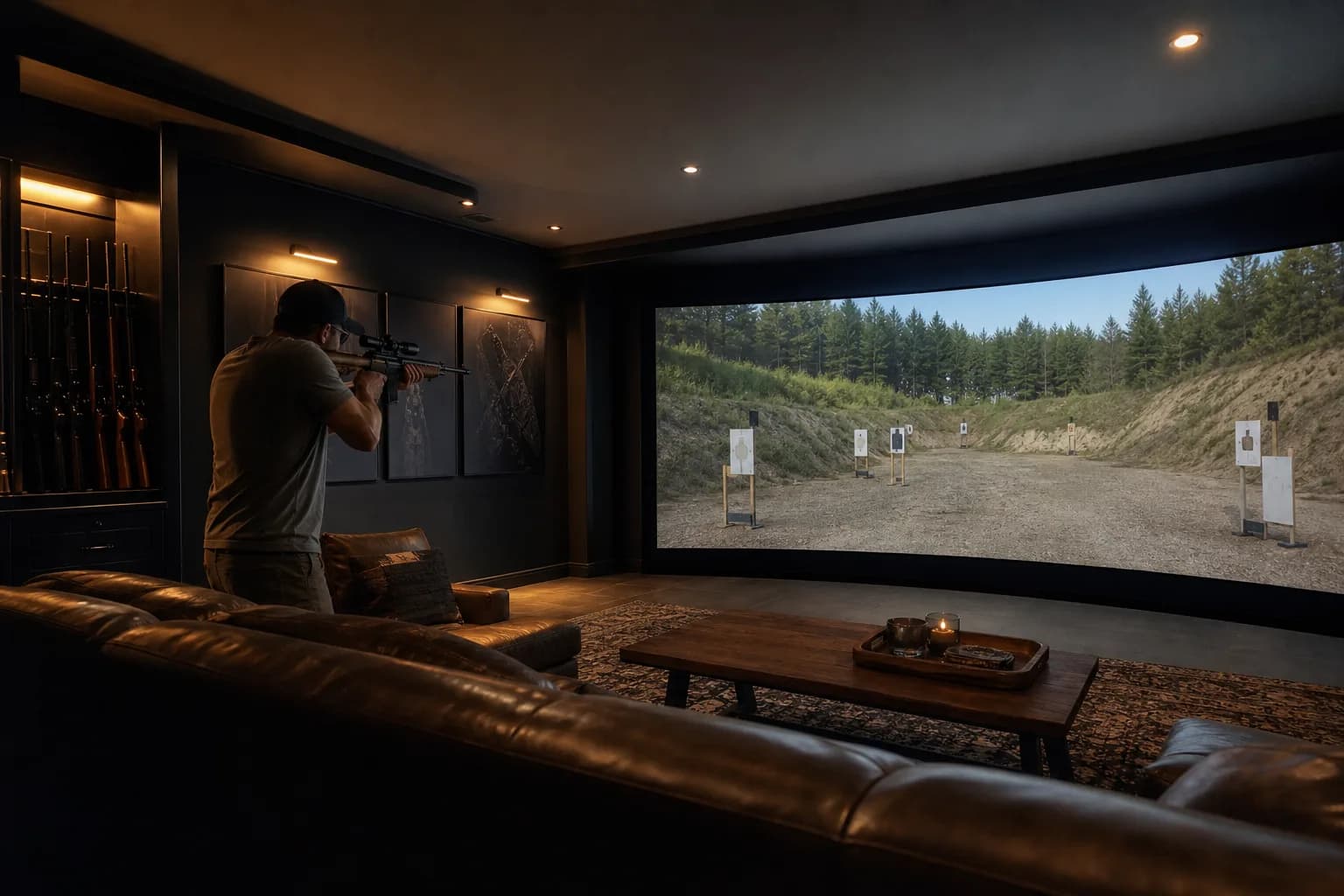
Yes. Marksman ST3 installs in dedicated home training rooms, basements, and garages — the same tracker core used at commercial ranges. Use our room planner to check ceiling height and wall width, then contact us for a home installation quote.

What is the Marksman simulator?

Marksman is a professional shooting simulator brand from Sweden. The ST3 platform uses patented optical tracking at 0.18 MOA with your real firearms — rifles, shotguns, and handguns — not laser projection or VR headsets.