
15 December 2023
Roe deer shot reactions & anatomy
Roe deer anatomy & shot reaction field guide
Where you hit a roe deer shapes how it runs — and whether you find it. This guide maps lungs, heart, liver, and kidney placement, then shows the typical escape reactions for leg, high chest, low chest, liver, and kidney shots so you can judge impact point in the field.
At Marksman we develop our shooting simulator software around three principles: realism, ethics, and safety.
In our 5.2 release, that is what guided the new roe deer discipline: true-to-life anatomy, gender selection, shot reactions by impact zone, and jump behaviour.
Roe deer anatomy
To understand how a roe deer reacts to a hit, you need to know what lies beneath the hide. Here is the internal anatomy of a roe deer:
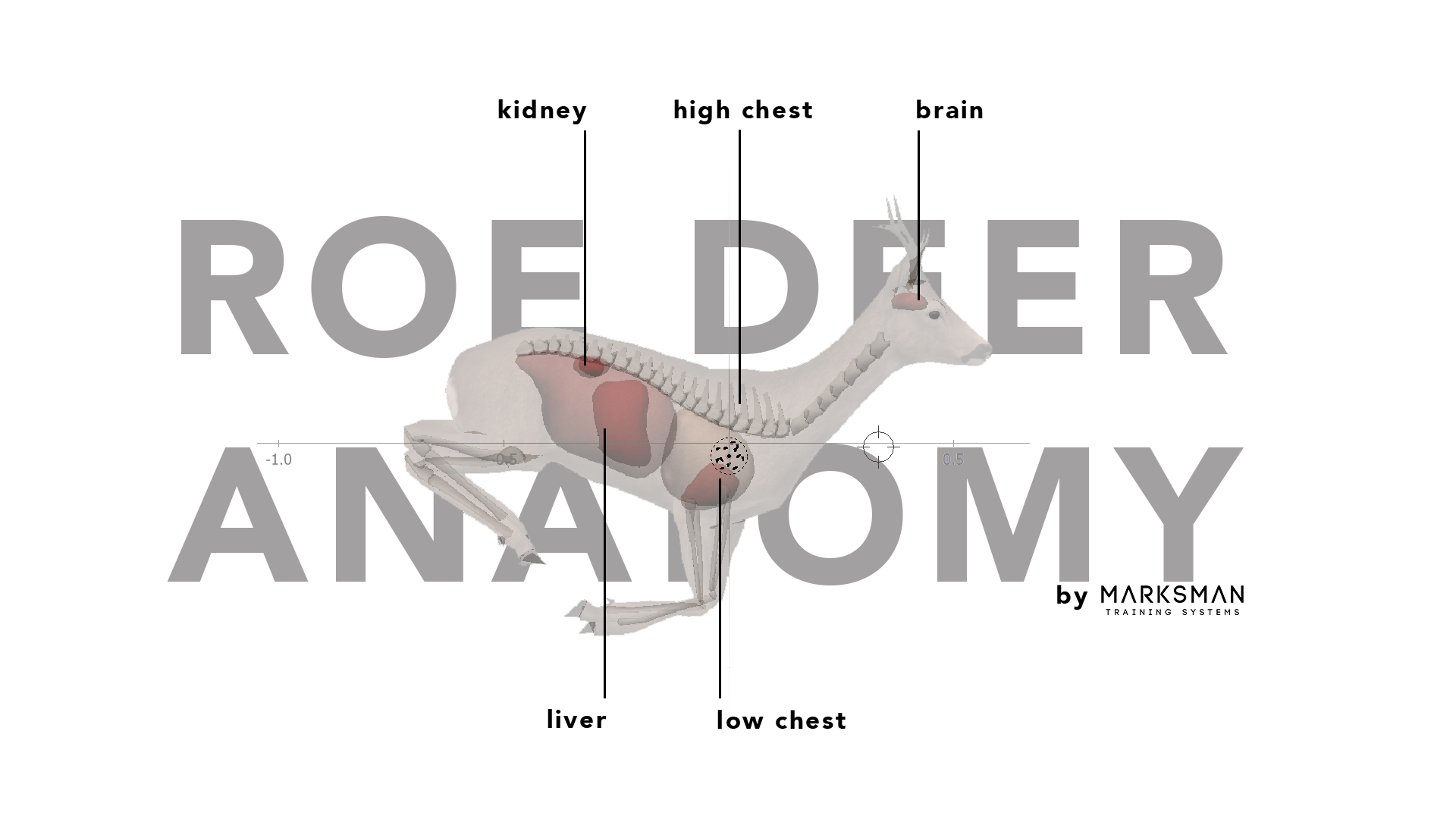
What hunters call the low chest zone includes the lungs and heart.
Roe deer reactions to a shot
Leg shots
Let's start with a straightforward case — a hit on the leg.
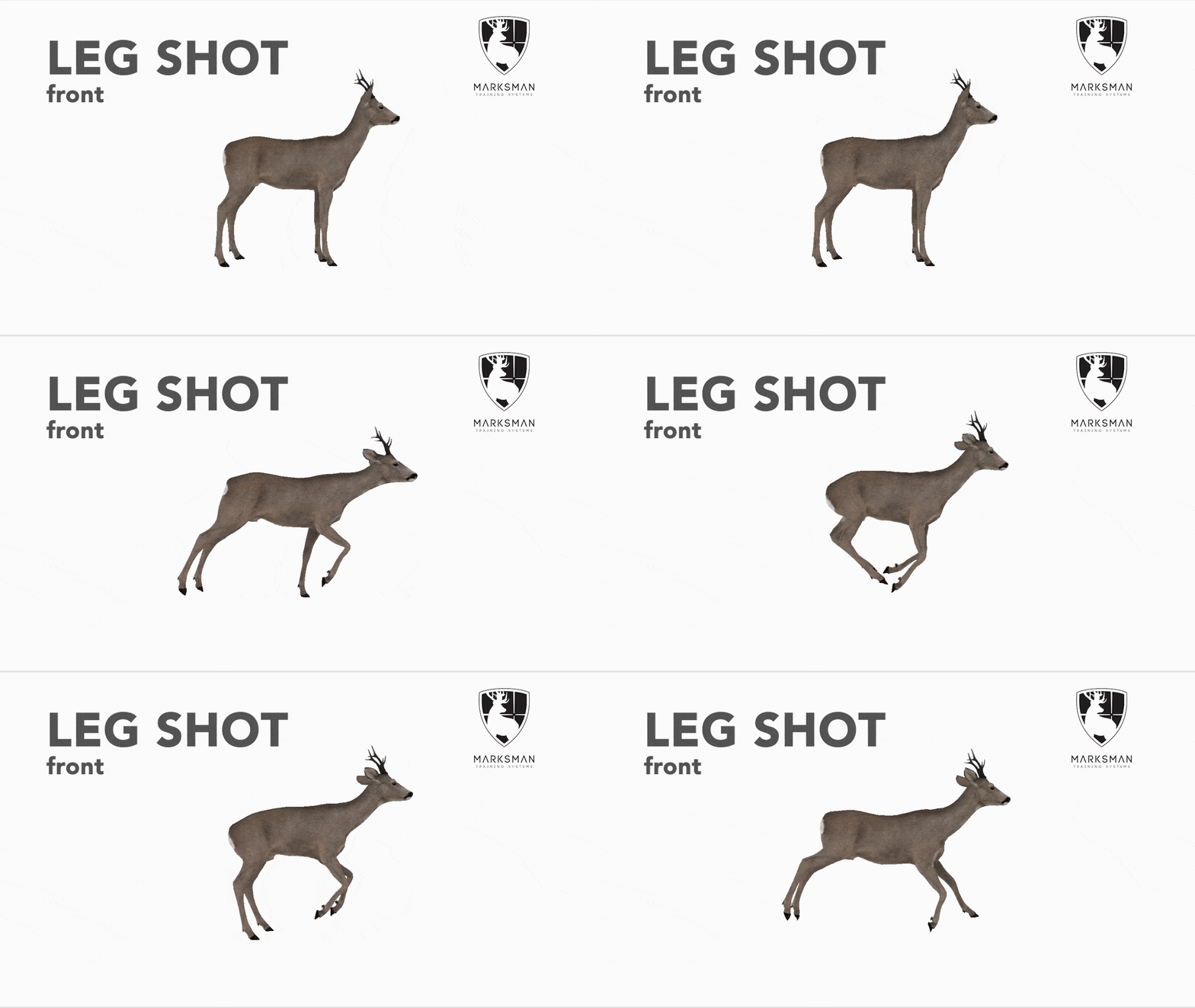
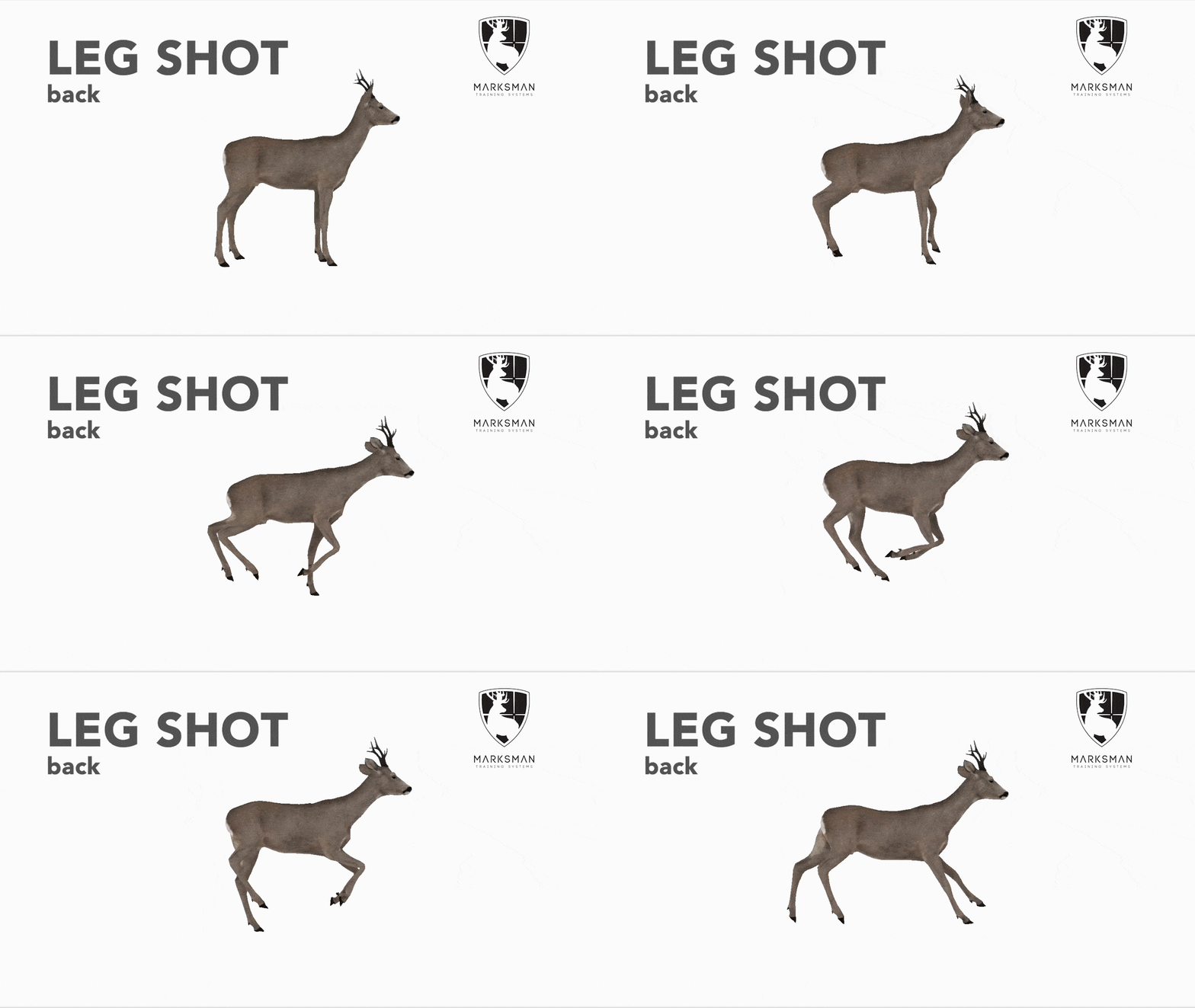
When a leg is struck, the roe deer typically flees on three legs — a clear sign of a non-vital hit that requires follow-up.
High chest shot
On roe deer, a safe, clean shot means placing the bullet in the vital zone. A true high chest hit — through the spine or upper vitals — usually drops the animal on the spot. That is a perfect shot.


Low chest shot
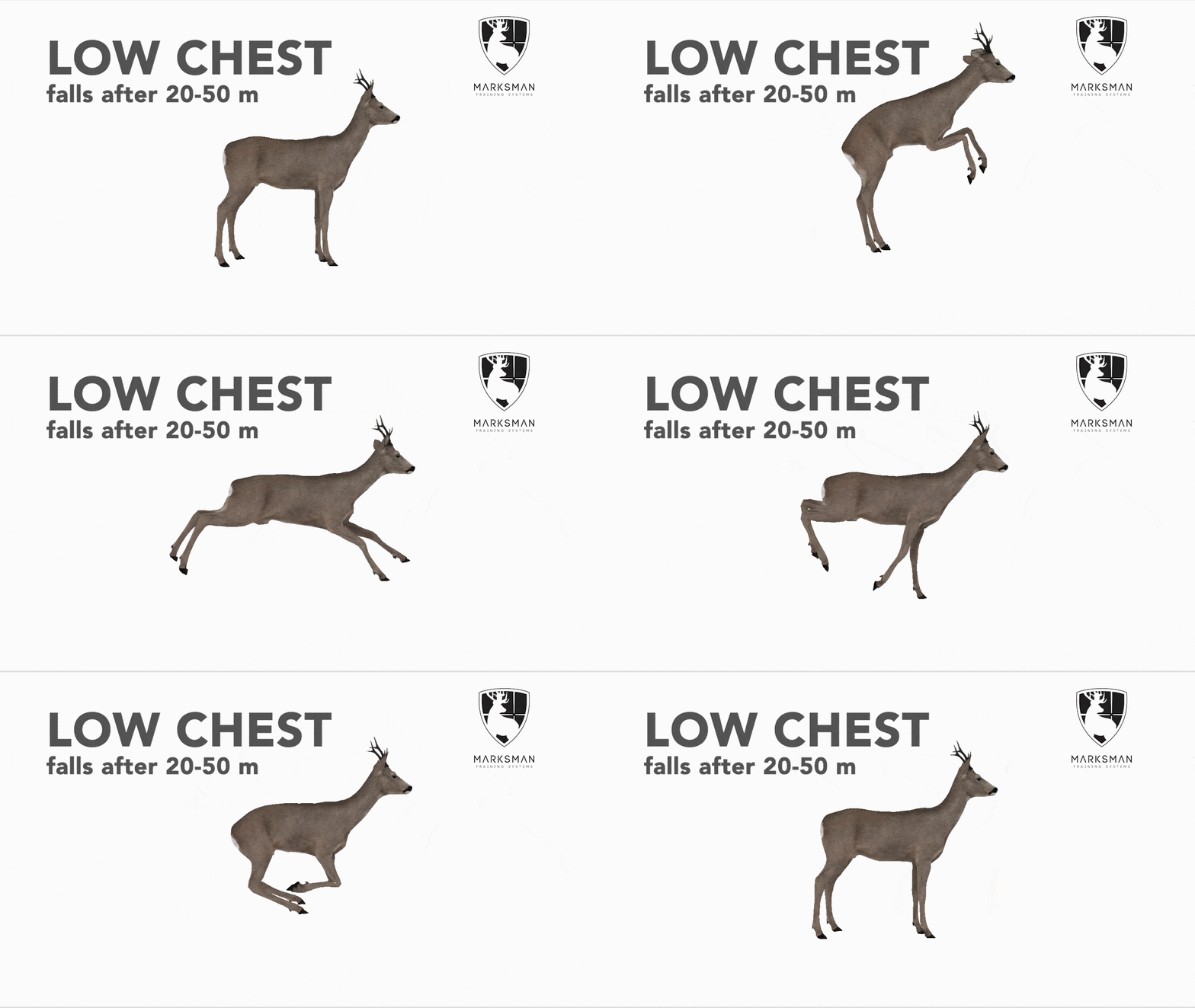
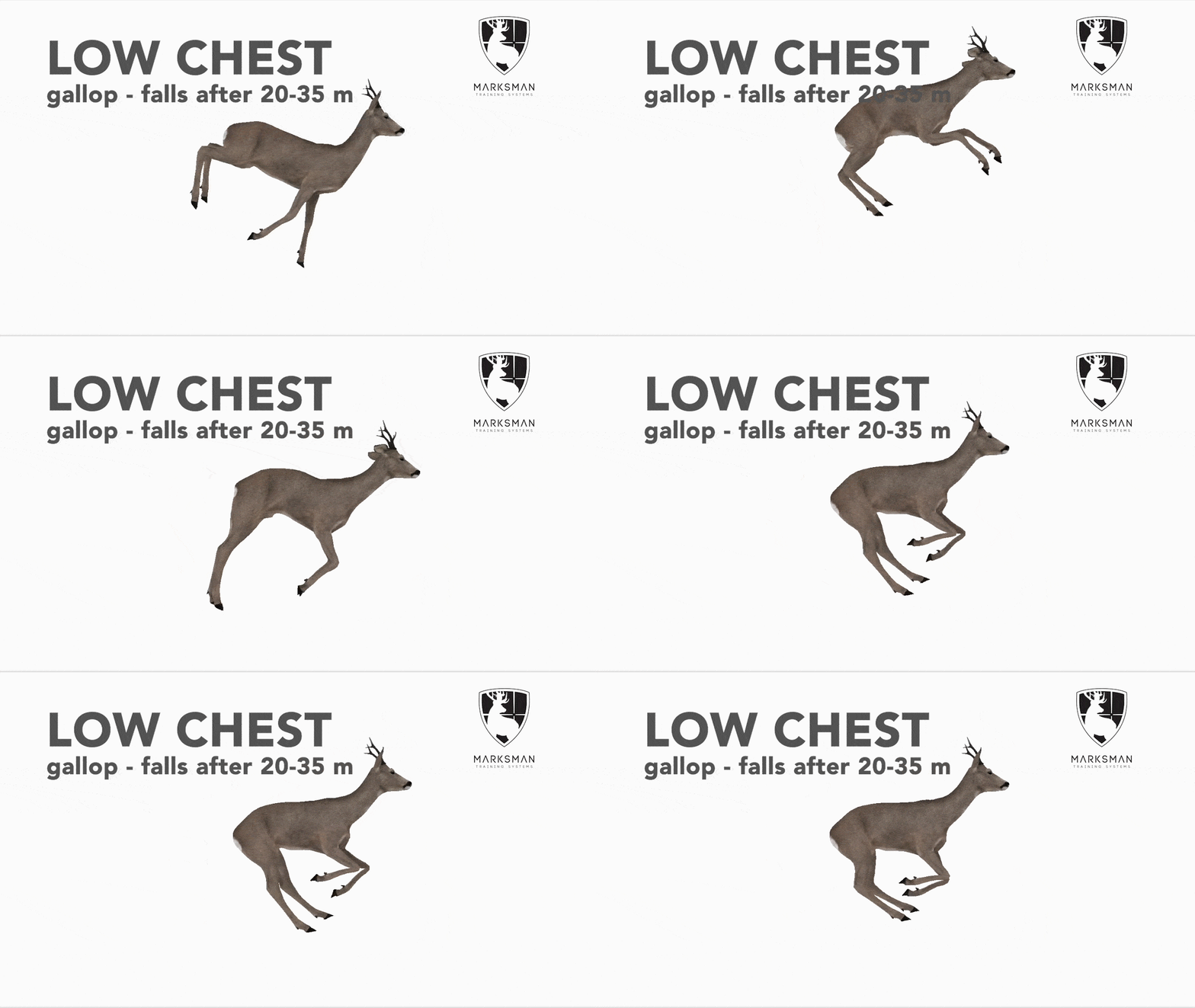
This is why you should always verify your shot. Often the deer runs out of sight — but it will not run far. Animals hit in the low chest (heart and lungs) usually collapse within 20 to 50 m. Always check your shot.
Liver shot
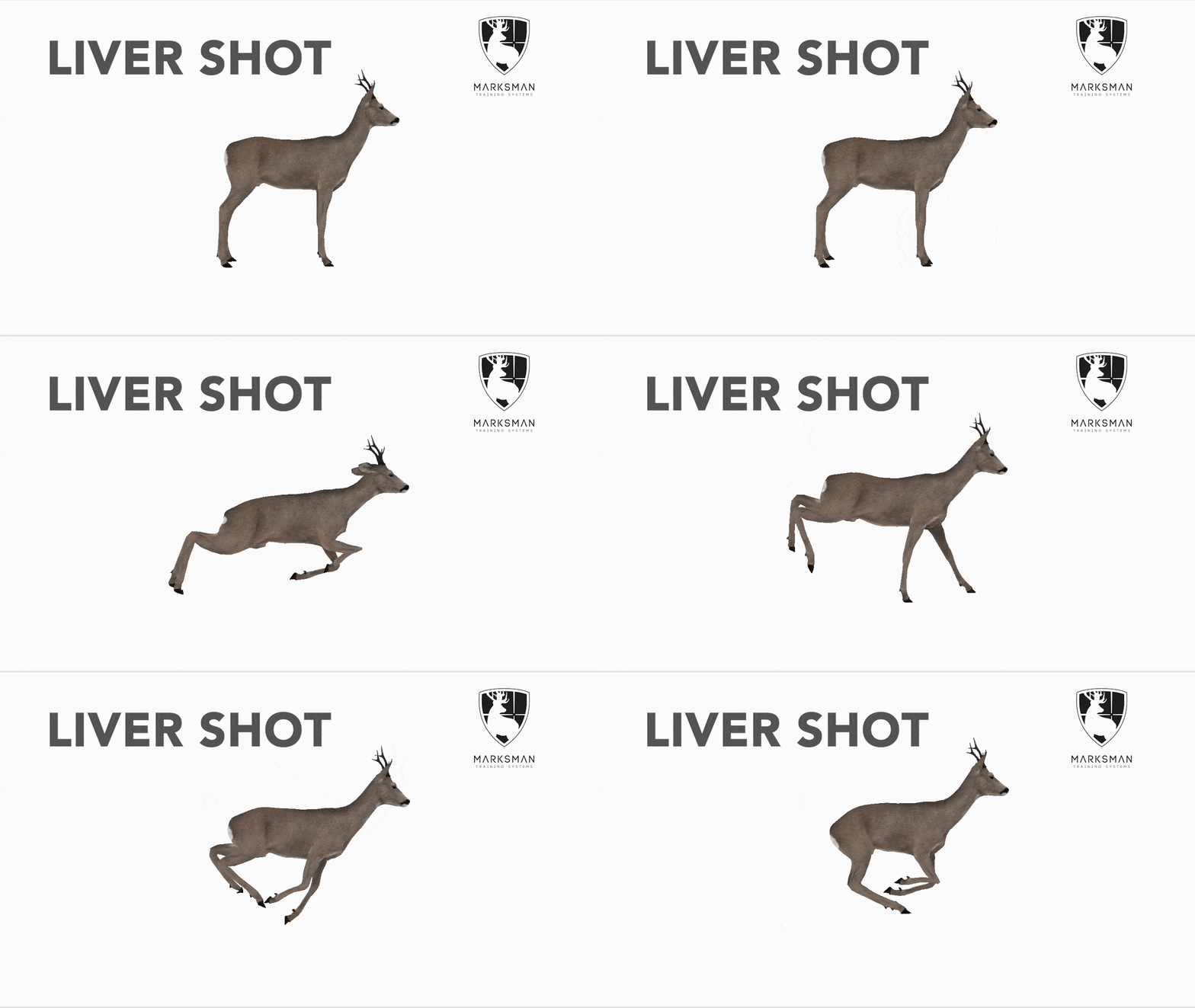
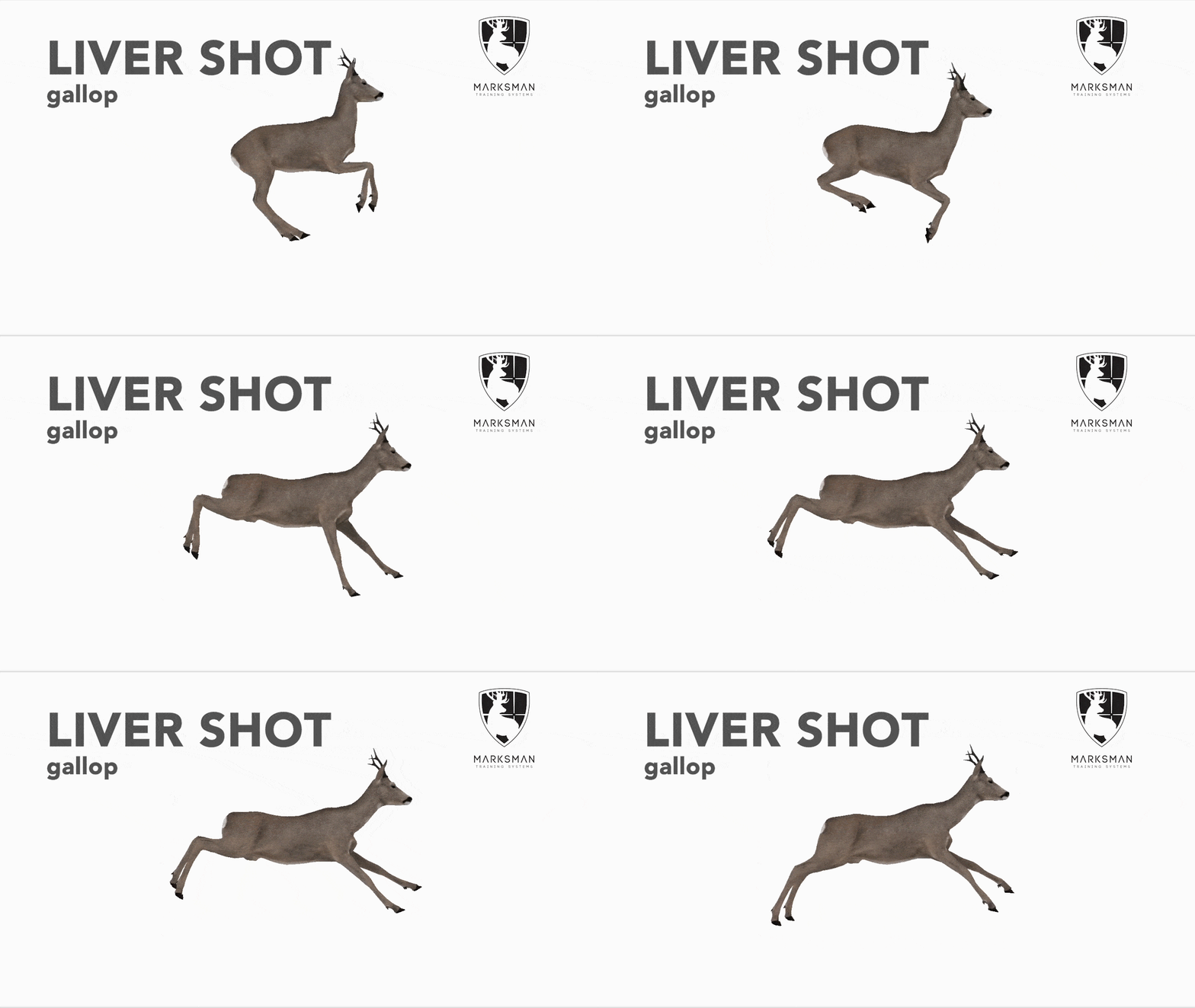
A liver hit is one you want to avoid: the animal is wounded and may travel a long distance before going down. On a running target, the aiming point is not the impact point — you must lead correctly. The Marksman simulator shows replay and hit placement analysis using your ballistics, the animal's speed, distance, and angle.
Kidney shot
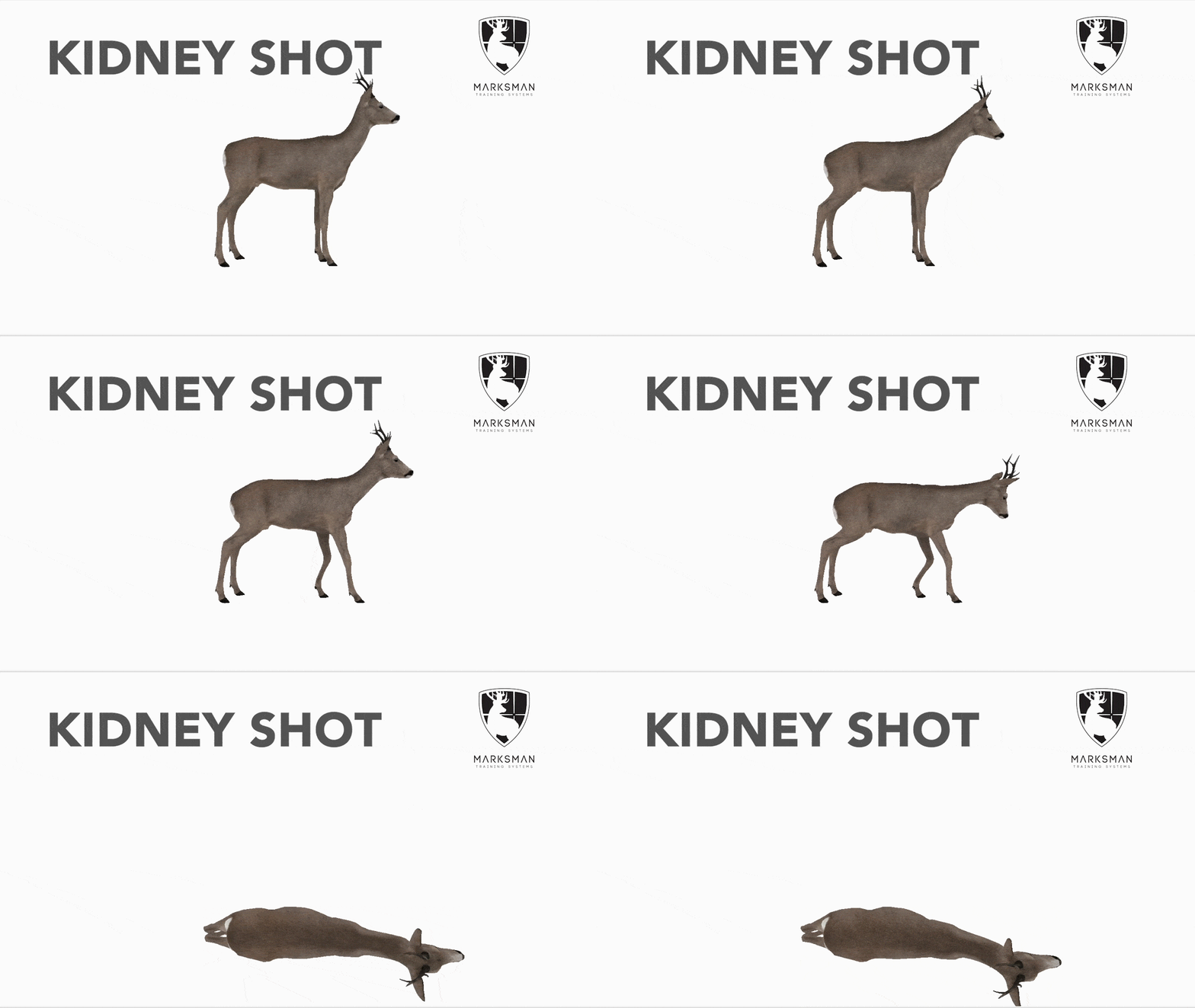
Kidneys are small and easy to miss — not a zone to aim for deliberately. Still, a kidney hit often brings the deer down after a short run. The animal may slow, pause, and then collapse.
Conclusion
The animal's reaction tells you a lot about the outcome. Roe deer are difficult quarry: they rarely run in a straight line and may jump at the shot. If you are unsure, give the animal time before assuming a clean kill.
Repeated practice raises skill, safety, and ethics. Installed in more than 40 countries, the Marksman shooting simulator helps you train with precise tracking and detailed shot analysis.
Frequently asked questions
How does a roe deer react to a high chest shot?
A true high chest hit reaches the spine or upper vitals. The animal usually drops on the spot or rolls over immediately — a short, decisive reaction that often means a clean kill without a long track.
What is the difference between a high chest and low chest shot on roe deer?
A low chest shot hits the lungs or heart lower in the body. The roe deer may gallop or run a short distance before collapsing. A high chest shot tends to stop the animal faster, often with an immediate fall or roll.
How do I recognise a liver or kidney shot on roe deer?
Liver hits often show an arched back, stagger, or a gallop before the animal goes down — tracking can take longer. Kidney shots may produce a hunched escape; the deer can travel farther before collapsing, so patience and careful blood trailing matter.
What happens when you only hit a roe deer's leg?
A leg wound is not lethal on its own. The roe deer typically flees on three legs at speed. Follow-up is required; treat any leg-only reaction as a wounded animal that needs a second shot or careful tracking.